
Basement insulation in State College PA - a warmer basement, water handled first
Cold floors upstairs and a chilly, damp-smelling basement? We check for water first, then insulate the walls with a method that suits them.
- Licensed and insured.
- Free quotes on site.
- Replies within 1 business day.
Is insulating my basement walls worth it?
Basement insulation in State College means adding insulation to your foundation walls, almost always from the inside since digging around an existing house usually isn't practical, so the basement holds heat in winter and the first floor often feels warmer too.
Most people call because of something they feel upstairs, like cold floors or a first floor that never quite warms up, or because they're planning to finish the basement and want the walls done right first. The price moves with how much wall there is, what it's built of, whether there's dampness to deal with before anything goes on, whether the walls are bare or already finished, and which method suits them. The schedule mostly turns on that same water question and, if you're finishing the space, on permit review, so I'd want to see the basement before guessing, and the written estimate I leave you lays out the method and the price for your walls.
How we do basement insulation, step by step
Damp walls come first, so before we talk about foam, panels or a framed wall, I look around the basement for water, like stains, white crust on the block, a musty smell or a crack that seeps after rain. If I find it, that gets a plan before anything goes on the wall, because I don't want to cover a wall that isn't ready. Then I look at what the wall is actually made of, since a flat poured or block wall and an old stone foundation call for different methods, and we talk through fresh air, your gas or oil appliances and any time you'd need to be out of the house. Once the plan is set, our installers prep the walls, put the insulation in and clean up, and I check the work with you before we call it finished.
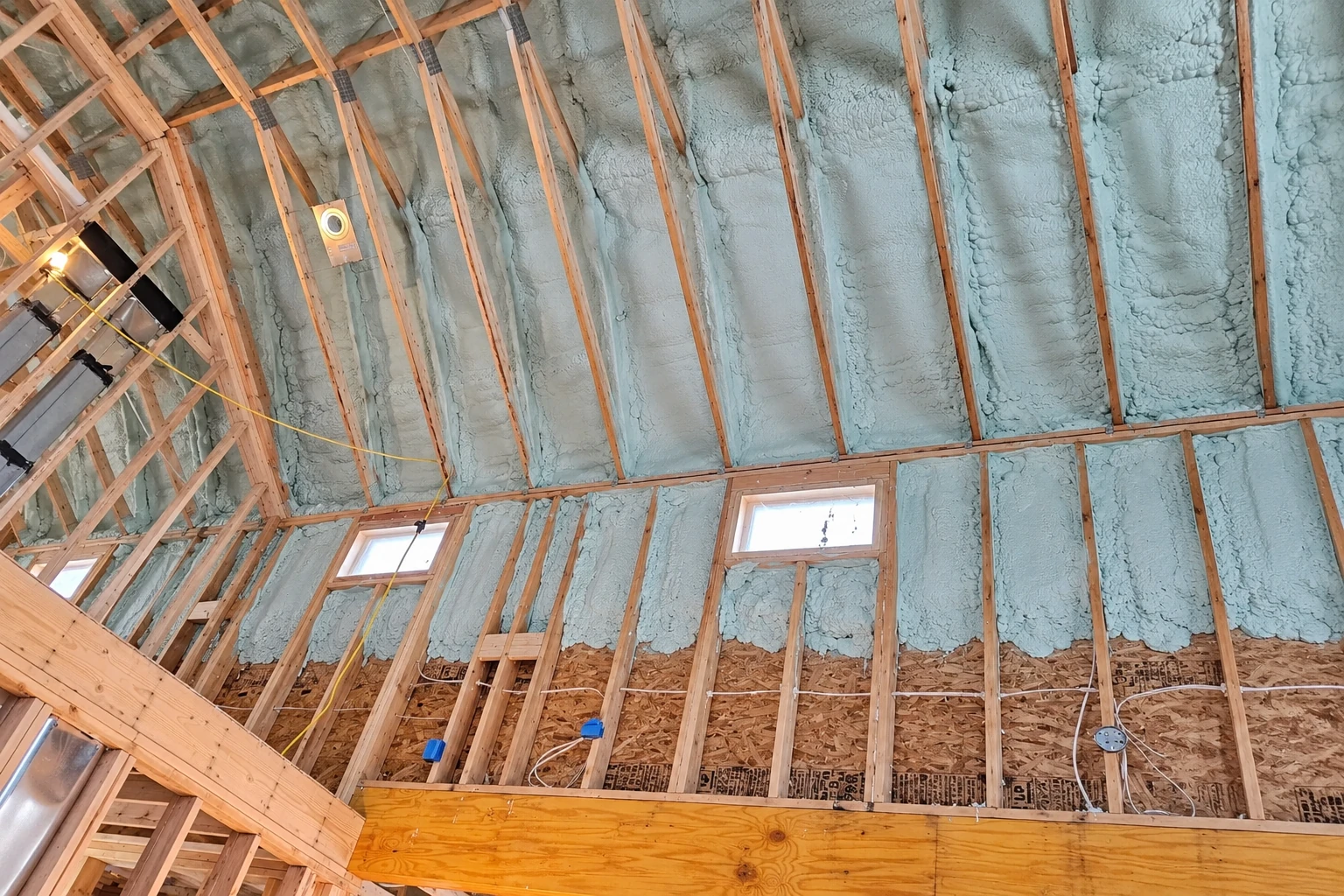
Foam on a basement wall usually means closed-cell foam insulation, the dense kind that blocks moisture as well as heat, because a foundation wall always has damp ground on the other side. Open-cell foam insulation is lighter and costs less, and it's usually a better fit for other parts of the house than for a wall against soil, so I'll tell you plainly which one your basement calls for.
Spray foam right on the wall
This suits bare poured concrete or block walls when you want insulation and an air seal in one layer, whether you leave the walls open or frame them later. Federal guidance says foam that isn't fire-rated needs an approved ignition barrier or a fire-rated layer such as drywall, so a bare-wall plan should still budget for that covering.
Rigid foam panels on flat walls
Foam boards fastened to the wall suit flat concrete or block and a homeowner who plans to finish the room, since drywall goes over them neatly. Unless the panels are fire-rated, they need the same covering as spray foam, so that's part of the plan from the start.
A framed wall, new or finished
A stud wall built in front of the foundation and filled with batts or blown-in insulation, loose fill blown through a hose, suits anyone finishing the basement, since it ends in drywall. If your basement is already finished, insulation can usually be blown into the wall cavities through small drilled holes instead of tearing the drywall out.
What basement insulation in State College runs into
In State College, the Centre Region Code Administration issues building permits, and the same office covers College, Ferguson, Harris, Halfmoon and Patton Townships and Bellefonte, so the process looks the same across much of the area. If you're finishing the basement, the permit plans show how much of each foundation wall sits above ground and the R-value, the rating for how well insulation slows heat, planned for each wall, which is one more reason to settle the method before plans are drawn. For insulation on its own, we check with the office that covers your address before we start, and where a permit applies, we prepare the paperwork, walk you through it and keep you posted on where it stands.
A lot of the older houses we see around here, in State College and on jobs in Tyrone, sit on fieldstone or rubble foundations, and walls built of irregular pieces let far more water through than poured concrete. On those I spend extra time on moisture before we settle on a method, and if you're farther out, please ask, since we work across the area and the cities around it.
Why homeowners in State College call us about basement walls
I write your estimate myself
I come out to every job, look over the basement and write the estimate myself, and I'm the one who checks the finished work with you. You deal with the person who saw your walls from the first visit to the last.
Learned the trade on local jobs
I spent several years running jobs as the right hand to another insulation contractor in this area before starting this business in 2023. That's where I learned to work in order, so nothing gets sealed or covered before it's ready.
Licensed and insured on every job
We're licensed and insured. That matters in a basement, where the work sits close to your furnace, wiring and water lines, and you shouldn't carry the risk of someone else's mistake.
Fresh air and radon talked through
Pennsylvania homes average 7 to 8 picocuries of radon per liter, above the EPA action level of 4, and one federal checklist calls for giving the owner a radon test kit when basement work ends, so please ask about one. That's part of why I talk through fresh air in your house before we begin instead of leaving it for the end.
If you'd like me to look at your walls, please call (814) 996-0002 or send us a note, and we'll find a time that works for you.
Request a quoteGet a written basement insulation estimate for your walls
We reply within one business day to set up a visit. I come out, look over your basement walls and go over what I find with you, then write up an estimate that's free, with no pressure and no obligation.
What happens after you call about your basement
Call us or send the form
You call (814) 996-0002 or send the form, and we get back to you to set up a visit at a time that suits you. It helps to mention whether the basement is finished and whether you've seen any dampness.
I look at the basement
I come out, look over the walls, any signs of water and your furnace and water heater, and go over what I find with you before anything is written up. You then get a written estimate that names the method, any water work that has to come first and the price, so you can decide with the numbers in front of you.
Our crew installs, I check
Where a permit applies, we take care of that side and keep you posted, and then our installers do the work in the order we agreed. I check it with you before we call it finished.
Frequently asked questions
What is the best way to insulate old stone basement walls?
Spray foam on the inside is usually the best fit, because it follows the bumps and gaps of fieldstone, brick or rubble where panels and framing can't sit tight. As with any basement, we sort out dampness before the foam goes on.
How do I deal with a damp basement before insulating it?
Fix the water first, because insulating over damp walls or leaks can hide the problem, and sometimes the insulation traps water against the wall and makes it worse. If I see signs of water on the estimate visit, I'll tell you what I found and what needs sorting before we'd insulate.
Do I need a permit to insulate my basement in State College?
If the insulation is part of finishing the basement, plan on a basement finish permit from the Centre Region Code Administration, which reviews your plans before work starts. For insulation on its own, we confirm with that office before we begin, so you're not guessing.
How much does basement insulation cost per square foot?
Insulating basement walls usually costs about $4.40 to $6.40 per square foot across the US, and that's the going rate for the wall work, not our quote. Your own price comes from your walls, so I measure and look them over on site and write it up for you.
Can you insulate a basement that has a gas furnace or water heater in it?
Yes, though with a natural-draft furnace or water heater in the basement, one federal checklist calls for a combustion safety test, which checks that exhaust vents outside instead of spilling back into the house. I go over your gas and oil appliances with you before we begin, because a tighter basement changes how air moves around them.
Should I put plastic sheeting over fiberglass insulation on basement walls?
Usually not, because plastic sheeting on the room side of fiberglass on a basement wall can trap moisture inside the wall. Federal guidance suggests kraft-faced fiberglass batts, the kind with a paper facing, or latex paint on the drywall instead.
Other insulation work that often goes with a basement
Closed-cell foam insulation
Dense foam that slows heat and stands up to moisture, worth a look when your foundation walls sit against damp soil or you want insulation and an air seal in one layer.
Open-cell foam insulation
Softer, lighter foam that fills odd-shaped cavities and quiets sound, often the better buy for a roofline or interior walls above ground than for a foundation wall.
State College, PA
Tell us what your basement walls are like
If you can tell us what the walls are made of, whether they ever get damp and whether the basement is finished, we can plan the visit around what you have.