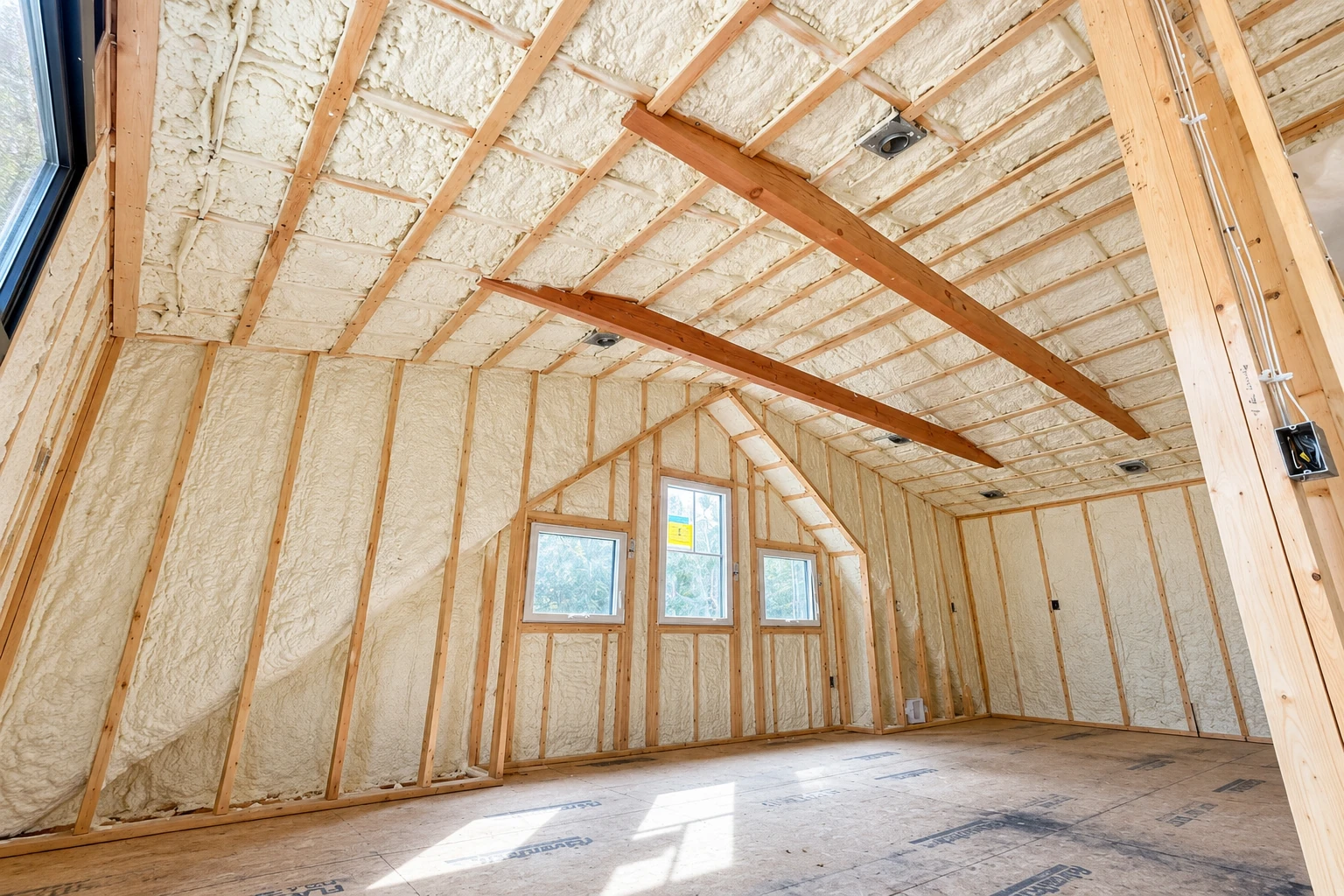
Attic insulation in State College PA - a sealed, evenly covered attic floor
Hot upstairs rooms, cold ceilings or a power bill that keeps climbing? We seal the gaps and even out the insulation overhead.
- Licensed and insured.
- Free quotes on site.
- Replies within 1 business day.
Is my attic ready for more insulation?
Attic insulation in State College usually means blowing loose-fill cellulose or fiberglass across the floor of a vented attic after the gaps in the ceiling are sealed, and it's often the best way to help an older house that has little or no insulation up there.
Most of the calls I get come from owners of older, drafty houses where the upstairs runs hot in summer, the floors feel cold in winter and only a few inches of old insulation sit up there, if any. The price moves with the size of the attic, how much insulation is already there and whether any of it has to come out, how many gaps need attic air sealing and how easy the hatch is to get through. The schedule mostly turns on whether a roof leak, a ventilation problem or old wiring has to be fixed first. I'd want to see your attic before I guess at any of that, and your written estimate lays it out once I have.
How we handle attic insulation
We start with air sealing, which means closing the gaps around can lights, pipes, wires, the chimney and the hatch, because insulation laid over an open gap just lets the draft keep running through it. Next we set baffles at the eaves, which hold a channel open so the vents keep the attic breathing and the fill can't spill into them. Then we blow the insulation evenly across the whole ceiling and carry it all the way out to the edges, where many attics are thinnest, instead of piling it deep in the middle. If your attic has a floor, I'll explain before we start how the boards come up and what holds the framing steady while they're off.
Most attics we work in get blown-in insulation, since loose fill settles around joists and wires in a way batts can't. If the drafts follow you from room to room, our home insulation work looks past the attic so the rest of the house isn't left leaking heat.
Sealing and topping up what's there
This suits a vented attic that already has some insulation in good, dry shape, because we seal the gaps and blow fresh fill over it. It's usually the best value, and it's what I recommend unless the attic tells me otherwise.
Clearing out old insulation first
This suits attics where the old material got soaked by a leak or is full of droppings, since covering it only buries the problem. We take it out through our insulation removal work, the cause gets fixed, and then we seal and insulate fresh.
Foam when the ductwork lives up there
If your furnace or ducts run through the attic, spray foam on the underside of the roof seals air while it insulates and brings that space inside the warm part of the house. Foam costs more, so I only suggest it when the ducts make it worth the money.
Attic insulation in State College, from permits to older roofs
Permits for building work in State College come from the Centre Region Code Administration, which reviews, permits and inspects construction for the Borough of State College, Bellefonte and College, Ferguson, Harris, Halfmoon and Patton Townships, and it asks for an application before any construction or remodeling begins. Whether your attic job needs one is something we check with the office that covers your address before we start, and where a permit applies, we prepare the paperwork, walk you through it and keep you posted on where it stands. We work across that whole area and the cities around it, and Central Pennsylvania sits in the energy code's climate zone 5, one of the colder bands, so the insulation should meet or exceed what current code asks for.
A lot of the attics I climb into here belong to older houses with thin, settled insulation, open gaps around chimneys and lights, and eave vents that got buried years ago, which is how icicles and ice dams end up along the gutters. A well-sealed, well-insulated attic can help prevent ice dams, so we plan the sealing and the insulation as one job, and we see the same kinds of houses on jobs in Bellefonte and Tyrone.
Why State College homeowners call Apex State College Spray Foam Insulation for their attics
I look at every attic myself
I come out to look at each job and write the estimate myself, and our installers do the work while I check it with you before we finish. You hear every step explained by the same person, from the first look to the last.
Years running jobs in this area
Before I started this business in 2023, I spent several years as the right hand to another insulation contractor around here, running jobs from the attic floor up. That's where I learned to do the work in order, so nothing gets sealed or covered before it's ready.
Licensed and insured, every job
We're licensed and insured, and that holds for every attic we work in, from State College out to Lewistown. It means you aren't carrying the risk of an uninsured crew working over your ceiling.
Backed by our satisfaction guarantee
Our attic work is backed by our satisfaction guarantee. If anything about the finished attic doesn't sit right with you, please tell me while we're still there so we can talk it through.
If you'd like me to take a look at your attic, please reach us through our contact page or call (814) 996-0002.
Request a quoteGet a free written estimate for your attic
Send the form and we'll reply within one business day to set a time for me to come out. The estimate is free, done on site and written up for you after I've gone over what I found, with no pressure and no obligation to go ahead.
What happens after you call about your attic?
Call or send the form
Call (814) 996-0002 or send the form with a few notes about your house, and we'll get back to you to set a visit. If you know roughly how old the house is, please mention it.
I look over your attic
I come out, look over the attic and the rooms below it, and go over what I find with you before anything is written up. You then get a written estimate showing the repairs, sealing and insulation your attic needs, so you can see where the cost goes.
We plan, then the installers start
Before we begin, I talk through fresh air, any gas or oil appliances and whether anyone should be out of the house, and we take care of the permit side where one applies. Then our installers seal the gaps, set the baffles and blow in the insulation.
I check it with you
When the installers are done, I go through the attic with you to check that the coverage reaches the edges and the eave vents are clear. We clean up before we leave.
Frequently asked questions
How much does attic insulation cost in State College?
Insulation work in State College usually costs about $1 to $5 per square foot, which is the going rate in the area and not our own price. Where your attic lands in that range comes down to the size, what's up there now and what has to be fixed first, and your written estimate gives you the figure for your house.
Do I need a permit to insulate my attic in State College?
The Centre Region Code Administration issues permits for building work in State College and asks for an application before construction or remodeling begins, so we check whether your attic job falls under that before we start. Where a permit applies, we prepare the paperwork and keep you posted.
What is the best way to handle vermiculite insulation in my attic?
Leave it undisturbed, because vermiculite may contain asbestos, and the EPA recommends not touching it. If we find it, we stop work, and removal should go to a trained, accredited asbestos abatement contractor that's separate from whoever assessed it.
What has to happen before new insulation goes in my attic?
The attic gets checked first for leaks, moisture, pest or structural damage and enough ventilation, and you get a list of needed repairs before work begins so you can plan them in. National guidance also has ventilation problems fixed first and active knob and tube wiring replaced or properly boxed before insulation goes near it. If your house has a gas or oil appliance that vents by natural draft, a combustion safety test, which checks that exhaust isn't spilling back into the house, comes before any attic work.
How do I know if my attic needs more insulation?
The usual signs are hot rooms upstairs, cold floors or ceilings, ice dams on the roof edge and only a few inches of insulation when you look in through the hatch. I'd want to see how much is up there and what shape it's in before I tell you what it needs.
Do we have to leave the house while you insulate the attic?
Not always, and I'd rather tell you once I've seen the attic and we've settled on the material. Foam comes with a re-entry time, a wait before you come back inside, and loose fill usually doesn't keep you out the same way, so before we start we talk through fresh air, appliances and when the kids and pets can be home.
Other insulation work that often goes with an attic job
Blown-in insulation
Loose fill blown through a hose fills around joists, wiring and odd corners, which makes it a good fit for topping up an attic or insulating an older wall cavity.
Home insulation
When drafts, cold floors and a high power bill come from more than the attic, we look at walls, basement and crawl space together and put the work in a sensible order.
State College, PA
Book your attic insulation estimate today
If you can, please jot down how you get into the attic, whether it has a floor and what insulation you can see now, so I can plan the visit around your house.