Attic air sealing in State College PA - upstairs rooms that stop feeling drafty
Drafty rooms, a hot upstairs or a climbing power bill often start in the attic. We close the gaps so your heat stays put.
- Licensed and insured.
- Free quotes on site.
- Replies within 1 business day.
Does my house need attic air sealing?
Attic air sealing in State College means closing the holes in your attic floor around wiring, plumbing pipes, recessed lights and the hatch, so warm air stops escaping upward and the rooms below stop pulling in drafts.
Most of the calls I get come from older houses where the upstairs runs hot, the floors stay cold and the power bill keeps creeping up, even though there's insulation in the attic. The price moves with how big the attic is and how easy it is to get around in, how many gaps there are to close, and whether the old insulation can be pulled back or needs insulation removal first, while the schedule mostly turns on whether anything has to be repaired before we can start. I'd want to see the attic before I guess at either, so I look it over and give you a written estimate with your own figure.
How we handle attic air sealing
We start by pulling back the insulation over the problem spots, because you can't seal what you can't see. Then we close the gaps at wiring, pipes and recessed lights and weatherstrip the hatch before anything goes back on top of them, since a layer of fluffy insulation slows heat but lets air pass right through it. If we find wet insulation, rotted wood or old knob and tube wiring, the early kind strung on porcelain knobs, that gets fixed first by the right trade, and we keep the eave vents clear so the attic can still breathe once it's sealed.
Sealing is often the first half of the job. Once the gaps are closed, retrofit insulation brings thin or uneven coverage up to depth over the top, and where the ductwork runs through the attic, spray foam insulation can seal and insulate in the same layer.
Seal the gaps and top up loose fill
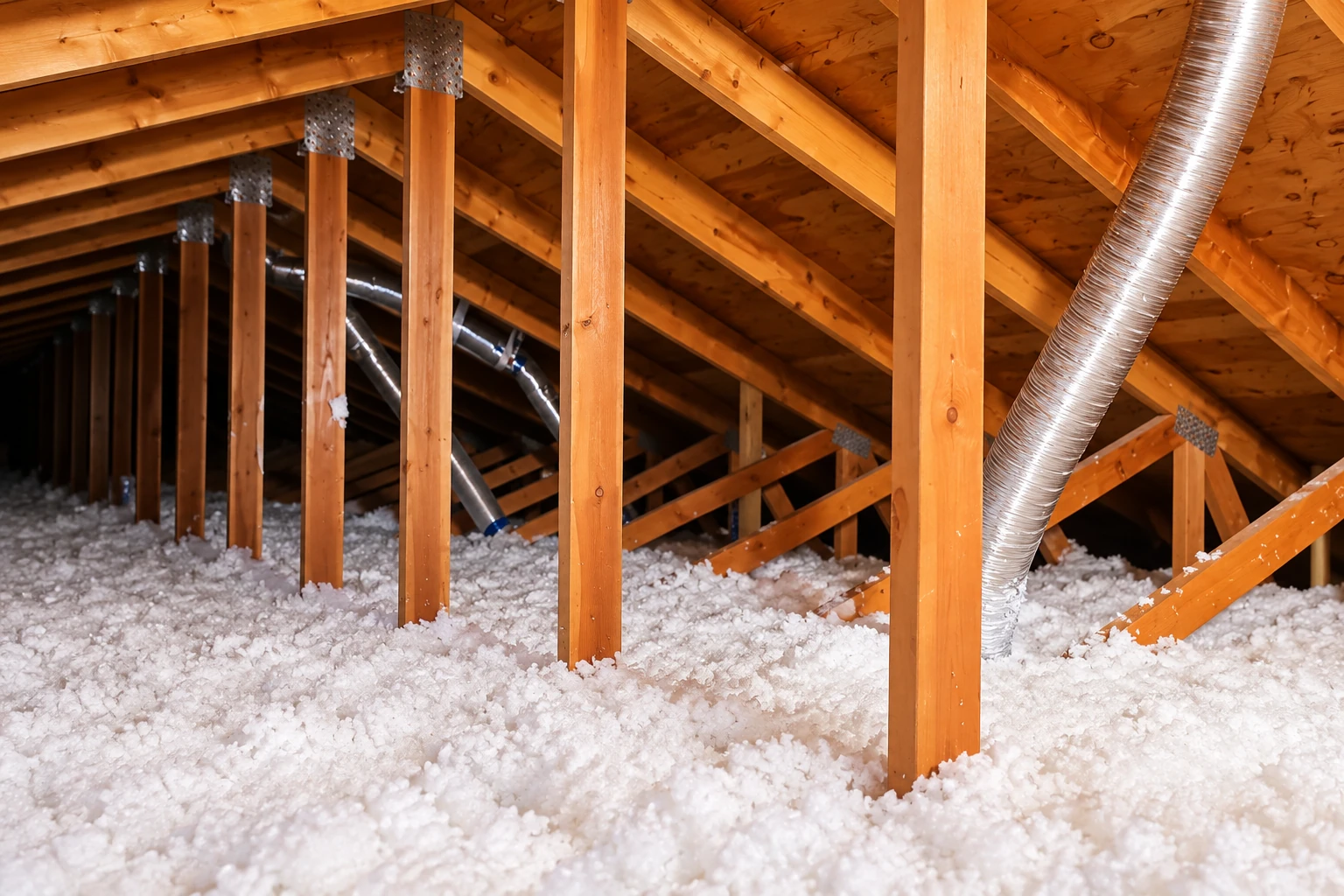
This suits most attics with an open floor and no ductwork, and it's the one I usually recommend because it costs less than foam and stops the same leaks. We seal first, then add blown-in insulation, loose fill blown through a hose, and make sure the edges get as much as the middle.
Foam where the ducts are
If your furnace or ducts live in the attic, foam on the roofline seals air and insulates at once, which keeps that equipment inside the warm part of the house. It costs more, so I only suggest it when the ductwork makes it worth it.
Attic air sealing and permits in State College
Building permits here go through Centre Region Code Administration, or CRCA, and zoning permits are required before the erection, alteration, demolition or construction of any structure. In State College, zoning comes first, so the city's planning staff decide whether a project needs a zoning permit, and when it doesn't, the Zoning Officer signs off and returns the application so it can go to CRCA. Work anywhere in Pennsylvania also has to follow the Uniform Construction Code, the state's building code. Because permit rules depend on your municipality, we check with the office that covers your address, and where a permit applies, we prepare the paperwork, walk you through it and keep you posted on where it stands. If you'd like to ask yourself, CRCA takes calls at 814-231-3056.
Many houses we see around here are older homes with years of wiring and plumbing changes punched through the attic floor, or story-and-a-half houses with kneewalls, dropped soffits and duct chases, the hollow boxes that hide ducts, open straight into the attic. We check behind and under those spots early because they leak the most and are the easiest to miss, and we find the same houses on jobs in Bellefonte and Tyrone.
Why State College homeowners call Apex State College Spray Foam Insulation to seal their attics
I look at every attic myself
I come out to each job, go through the attic and write the estimate myself, and our installers do the work. Before we finish, I check it with you, so the person who planned the job is the one who signs off on it.
Fresh air and appliances discussed first
Before we begin, I talk through fresh air in the house, any gas or oil appliances and whether you'll need time away from home. Sealing changes how a house breathes, so you should know what to expect before the first gap is closed.
Learned the trade in this area
I spent several years running jobs as the right hand to another insulation contractor in this area before I started this business in 2023. That's where I learned to do the work in the right order, so nothing gets covered before it's ready.
Licensed and insured for your job
We're licensed and insured. That protects you and your house while our crew is up in the attic and moving through the rooms below.
Thank you for reading this far. If your attic has been on your mind, please get in touch or call (814) 996-0002, and I'll come take a look.
Request a quoteGet a written estimate for sealing your attic
Send the form and we'll reply within one business day to set a time for me to come out. The estimate is free and done on site, and I go over what I find in your attic with you before anything is written up. There's no pressure and no obligation to go ahead.
What happens when you call us to seal your attic in State College?
Call or send the form
Call (814) 996-0002 or send the form, and we'll set a time that suits you. If you can, tell us roughly how old the house is and where the attic hatch is.
I look over your attic
I go through the attic and the rooms below, show you the gaps and any repairs I find, and talk them over with you. Then you get a written estimate that lays out the work, the order it happens in and the cost, so you know the figure before anything is booked.
Our installers seal the gaps
Once any repairs and the permit side are taken care of, our installers seal the attic in the order the estimate lays out. They keep the mess to the attic and clean up the path they used through the house.
I check it with you
Before we call it finished, I go up and check the work, then walk you through what was done. The EPA recommends testing your home's radon level with a test kit once air leaks are reduced, so it's worth picking one up.
Frequently asked questions
How do I know my home needs attic air sealing?
Drafty rooms, rooms that never match in temperature, high heating or cooling bills, winter ice dams, dry winter air and a lot of dust are the signs ENERGY STAR lists for a home that may be a good candidate. If you're seeing a few of them, it's worth having the attic checked, and that's what I do at the estimate.
Should I seal my attic or insulate it first?
Seal first and insulate after, which is the order the EPA recommends. If you're planning both, book them that way, because once fresh insulation is down the gaps underneath are buried and hard to reach. We can do both jobs for you in that order.
What safety checks come before attic air sealing?
If you have a furnace, boiler or water heater that burns fuel and vents up a chimney on its own draft, a DOE checklist calls for a combustion safety test, a check that exhaust isn't spilling back into the house, and any problem it finds gets fixed before attic work starts. Vermiculite insulation, the loose gray-brown pebbly kind, stays untouched until an approved lab tests it for asbestos, and the local health department can name a lab. The knob and tube repair mentioned above comes first for safety too, since that wiring can be a fire hazard when insulation touches it.
How much does attic air sealing cost in State College?
I can't give you a fair number until I've seen your attic, because the cost comes down to the house in front of me. Beyond size and the number of gaps, things that add work are a tight or awkward hatch, kitchen, bath or dryer vents that blow moist air into the attic and need to be run outside, and attics with little or no ventilation. Your figure goes in the written estimate.
How long does attic air sealing take?
Most of the time goes into pulling back old insulation and reaching each gap, so the length depends on the size of the attic, how many gaps there are and how much has to be moved, and I'd want to see it before giving you a time. Repairs that have to come first, like wiring or wet insulation, can push the start back, and I'll tell you what to plan for at the estimate.
Do I have to leave the house while you seal the attic?
Usually not, because most sealing is done from inside the attic with caulk and foam, and the rooms below stay livable. If part of your job calls for spray foam, I'll tell you the re-entry time, when it's safe for you, the kids and the pets to come back inside, and we talk through any time away before we begin.
Other attic work we do
Retrofit insulation
If your attic insulation is thin, settled or patchy, this brings it up to a full, even depth after the gaps are sealed, so the house holds heat the way it should.
Spray foam insulation
When ducts or a furnace sit in the attic, or the space is too tight for loose fill, foam can stop air leaks and insulate in one layer instead of two.
State College, PA
Ask me to look at your attic
Please have a short list of the signs you've noticed ready when you call (814) 996-0002 or send the form, and tell us if the attic has vermiculite or you have a furnace or water heater that vents up a chimney, because that tells me what to check first, and every job is backed by our satisfaction guarantee.